This is a common topic to talk to children about. I am sure everyone has their own favourite way of dealing with this subject. Here is mine and I hope that you may be able to pick up some pointers that will help you.
Eating
I normally start off by asking the children what is their favourite food. This normally gets them into a very good mood. And who wouldn't? We are talking about everyone's favourite topic here - food!!
Why we eat
Ask them why do we eat? Well, there are various reasons. First, food gives us strength to do work. Discuss the types of work that we do when we have strength from food.
Food keeps us alive. We are not going to survive more than a few days without food. Get the children you imagine how they feel when they missed one meal. Then, imagine missing it many many times.
Food keeps us healthy. Food contains vitamins and all the necessary nutrition that will keep our body healthy and recover from illness. Without food, we will fall sick very quickly.
Food also helps us to grow. All that food goes into building up our muscles & bones and without food, you will be stunted up for the rest of your life.
When, where and with whom we eat
When do we eat? We eat at set times during the day, like dinnertime, etc. Who do we eat with? We eat with our families at home. Ask the children who they prefer to eat with - people they like or people they do not like? Interestingly, eating is not just for our nutrition. It is also a social event. That is why we prefer to eat with people we like.
A birthday party
Talk about a party where everyone gets together to eat, say, a birthday party. Ask the children what must be there for a birthday party to happen. We must have lots and lots of food. And where is the food? The food is all on the table and there is a nice tablecloth on top of the table, washed and clean. The pride of place is of course the birthday cake.
Then, you must also have lots of people. Imagine if you have got a birthday party with lots of food but no one to share it with? It wouldn't be much fun, would it?
And of course, the most critical ingredient of a birthday party is the birthday boy or girl. I f there is no birthday boy or girl, there is no point having a birthday party, is there? Get the children to talk about the birthday parties that they have enjoyed. What are the key features of those most memorable parties?
Spiritual food
Now that you have the children have the hook of something they are familiar with, you can now hang the concepts you are trying to introduce on it. Remember parallels - every idea discussed in the hook has a parallel in the concepts you are introducing the children to.
We all have a physical body that we feed physical food to get physical strength, to stay alive physically, to be physically healthy, and to grow physically. But we also have a spirit. Explain what happens if we have a body with no spirit. We will be dead.
Now, this spirit also needs food, but not physical food like the physical body. How will a spirit take and eat physical food anyway? A spirit needs spiritual food.
The spriritual food that we Catholics take is called the Eucharist. The word is originally Greek, meaning 'thanksgiving'. We
see it as the bread and wine that becomes the Body and Blood of Jesus
when the priest consecrates them at mass. Jesus has given us his body and
blood to be the spiritual food that our spirits need because he loves
us so much.
I use the term Body of Jesus as it is a more intimate term for the children. When discussing what the minister say at mass or more doctrinal concepts, I would refer to Body of Christ. Be prepared for any confusion if you were to use the terms interchangeably.
Our spirit need the spiritual food to get spiritual strength to do spiritual work. Discuss the types of spiritual work that we do - pray, tell people about God, to love and care for others, etc.
Our spirit also need spiritual food also to stay alive. Without spiritual food, there will be no spirit to enter heaven!! We also need spiritual food to stay spiritually healthy and keep us away from spiritual illness like sins and temptations. And we also need spiritual food to grow spiritually, so that we can one day be a full member of the Church.
The bread and wine
The bread is small flat piece like a coin. It is called a host. When we go to receive the host, we are said to be going up for communion, which is another way of saying receiving the bread and wine.
The host is baked from wheat like normal bread, but without the yeast. Yeast makes the dough rise up like the bread slices that we
have at home. Without the yeast it stays flat. They are baked elsewhere, traditionally by some nuns. If you ask the sacristan in the sacristy
at the back of the church politely, he may show you the hosts
have not been consecrated.
The wine is
made from grapes and must be fermented. In the olden days people
drink wine because it is safer. Normal water gets contaminated but wine do not.
The wine is not red because it represents the blood, but it is just common practice to have red wine. I have had white wine for mass before. My parish priest in London gives us
wine at every Sunday mass and he knows where to get
the best cheap wine at the supermarkets. Once when we ran out of wine, we had sherry
for mass.
A meal with the family of God
We have the Eucharist at mass every Sunday in church with the rest of the family of God. Like our mealtimes at home, mass happens at set times every week and on feastdays. Actually, we have mass everyday in many parishes but weekday masses are optional.
And just like a birthday party at home, there is the table in the middle of the sanctuary at the front of the church (not where the front door of the church is), called an altar. On the altar table, there is an altar cloth on top of it - washed and clean - just like the tablecloth on the dining table at home. And taking the pride of place on the altar is the bread and wine.
Just like we must have the birthday boy and girl, we must have the priest at mass (careful that the analogy is not exact here). Without a priest, we cannot have a mass. And very importantly, we must have the people. Can you imagine if only the priest is there in church but none else turned up for mass? Is there any point in having a Sunday mass for the parish if there is no people? (Actually, current Catholic doctrine is that a mass with a priest but without the people is valid but a mass with the people but without a priest is not.)
Only baptised Catholics can go for communion at a Catholic mass. We can't go to a non-Catholic church for communion. That would be
just like turning up at the house of a total stranger and saying you want
to have dinner with them
The symbolism
The bread is broken and shared out with all baptised Catholics attending mass. When we share the Eucharist together with other Catholics, we are said to be in communion with them. This means that they believe in the same faith as us and follow the same Pope.
This is important we only those who believe in the same faith and follow the same Pope can be considered part of the same family. That is why we sometimes call the people in the church as 'part of the Body of Christ'
When receiving communion
When we go up for communion, the Communion Minister will hold up the host and say "Body of Christ", we reply "Amen". 'Amen' means 'we agree' (note - it doesn't mean I believe as I find it commonly taught. This incorrect understanding destroys the beauty of the idea here.)
So, when we say 'Amen", we are agreeing that the host is now the Body of Christ. We are also agreeing that both us and the Communion Minister are part of the same Body of Christ, along with everyone else who shared the bread at that mass, and in countless other Catholic churches all over the world. Without that "Amen", we may not get communion if we do not agree that we are part of the same Body of Christ. That is why the children must say their Amens loudly.
Wine
Wine represents fellowship. When adults get together to drink wine, they are happy and have a jolly good time. As such, having wine together means that we are happy and celebrating together. Careful that this discussion do not get too carried away.
Table manners
Talk to the children about table manners and what kind of table manners we are expected to have at the dinner at home.
If someone wants to give us chocolates, for instance, we ask nicely, hold out our hands politely and say thank you when we receive it. We do not grab the chocolates in one hand and dump it into our mouths, all at one go!! And we do not munch them nosily or talk when eating.
The mass is a meal and like any other meal, we have table manners at mass. Just like at the table dinner table, we are not expected to be playing around with the food or be distracted on our iPads, we should not be playing around or talking when going up for communion.
And just like the chocolates, we ask for the communion politely by holding up our hands, wait for the Communion Minister to place the host on our flatly opened palm before picking it up with the other hand and place it in our mouth. Only difference with chocolates is that we say "Amen" before receiving instead of "Thank you" after.
We do not chew it nosily or talk when eating the host. I also encourage the children to respect the host because it is Jesus sacrificing his body and blood for our spiritual good. Please do not tell the children that blood will come spewing out of their mouth if they chew the Body of Christ!! That is actually a heretical view as the Church is clear that the Eucharist is not the physical body of Jesus.
One final thing
If you are brave enough, you can try this. You must make sure the children do not get carried away with the concept, balancing the informality of delivery with the seriousness of the underlying message. If the point gets across, it can be rather a rather convincing notion to reflect on.
Our physical bodies eat physical food to get physical strength to do physical work. So, what happens to the physical food in our physical bodies if we do not do physical work? Other than turning into fat, it also gets flushed down a physical toilet.
Likewise, if we do not do spiritual work after eating the Body of Christ, it may get flushed down a physical toilet. And, we don't want that, do we?
Takeaway message
Just like our physical bodies eat physical food to get physical strength to do physical work, all Catholics eat the Body and Blood of Jesus at mass to get spiritual strength for our spirits to do spiritual work. Not doing the spiritual work after eating the spiritual food is a disrespect to Jesus, who has sacrificed his body for our spiritual well-being.
Monday, August 5, 2013

Sunday, July 28, 2013
18th Sunday in Ordinary time
Images
Treasures in heaven
Points
to note
We live in a materialistic
world and our children are a sad reflection of ourselves. Before we get carried away with this cliché,
we must remember that children are basically not materialistic. Therefore it needs prompt action to steer any
discussions on materialism in the right direction.
While children are not
materialistic by nature (we just make them like us), they have prized
possessions: a well worn out teddy bear for instance. There are girls I know who keep them well
into their twenties. It will be good to discuss
whether they are willing to sacrifice that teddy bear for instance.
A few points about being
materialistic. Jesus never said that
money is evil. He said the love of money
is the root of all evils. Jesus never
said the poor are blessed or rich people cannot go to heaven. It is the poor in spirit who are blessed and
it is just that little bit harder for the rich to get to heaven (eye of the
needle?). What he meant was that if you
are poor but you love money, you won’t be among the blessed but if you are rich
but was never that interested in money, you should be ok.
As they say, there are two
types of people in the world, people who are rich and people who wants to be
rich. Basically, it implies that the
base motivation of people remains the love of money. We Christians would like to think there is a
third category: people who follow Jesus.
Liturgy
Acclamation before the
Gospel
Alleluia! Alleluia!
Your word is truth, O
lord,
consecrate us to the
truth.
Alleluia!
Gospel
Explain
to the children what a parable is. It
may not be a story that actually happened, but it does contain a truth
nevertheless. Truth doesn’t mean the
same thing as factual evidence. Truth is
reality. And parables often tell a
little something about what we really are like.
Jesus used parables to explain the Truth.
The Lord be with you.
All: And with your spirit.
A Reading from the Holy Gospel according to St
Luke
All: Glory
to you O Lord
(Lk 12:13-21)
A man in the crowd said to
Jesus, “Master, tell my brother to give me a share of our inheritance.” “My friend,” he replied, “who appointed me to
judge your claims?” Then he said to
them, “Beware, and be on guard against greed of any kind, because what a man
owns will not make his life safe, even when he has more than he needs.”
Then he told them a
parable: “There was a rich man who had a
good harvest from his land. He thought
to himself, ‘What am I to do? I have not
enough room in my barns to store my crops.’
Then he said, ‘This is what I will do:
I will pull down my barns and build bigger ones, and store all my grains
and my goods in them. Then, I will say
to my soul: ‘My soul, you have plenty of
good things and you can eat, drink and have a good time for many years to
come. So take things easy,’ But God said to him, ‘Fool! This very night I will ask for your soul
back. And these good things of yours,
whose will it be then?’ So it is when a
man store up treasures for himself on earth instead of making himself rich in
the God’s eyes.”
This is the Gospel of the
Lord
Dialogue
If you are going to go
away and live somewhere else for quite a long time, what would you take with
you?
Why?
If you were told that
there isn’t enough place in the car and you would have to leave something
behind, what would you leave behind?
The rich man in the
parable was going to go away to live somewhere else that night, but he didn’t
know it. He thought he could take his
riches with him wherever he was going.
Could he?
Explain that when we go to live with
God, we take none of our favourite toys or treasured possessions with us.
What did the rich man do with
all his wealth? To have a good life.
How can we make sure that
we can have a good life in heaven? Discuss how Jesus has promised that all who
believe in him and love and do good will deserve to be with him in
paradise. That is the way a Christian
pile up treasures in heaven.
Discuss
greed. That is what the rich man had
lots of. For a Christian, greed will
just reduce his treasures in heaven.
Monday, July 22, 2013
Soundbites about the Pope
With this current highly popular Pope Francis, it may be time to share some soundbites about the Papacy. Again, I do not expect anyone to memorise all these but most people would find it really interesting. It is normally useful to have them on hand when the children ask questions or if you are preparing a special session on the subject. So, here goes.
Who is the Pope
The head of the Catholic Church is Jesus Christ (note not the Pope!!). There are 1.2 billion Catholics throughout the world and Jesus needs help to take care of all 1.2 billion. So, Jesus has the Pope to help him with the job.
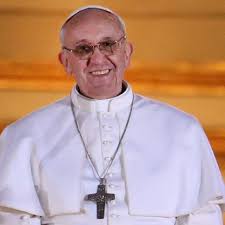
The current Pope is Pope Francis. He was formerly the Argentine Archbishop of Buenos Aires, Cardinal Jorge Bergoglio.
The Pope's name
As with the norm now, the Pope took on a new name when he became Pope. The tradition of the Pope picking a new name started with a Pope whose name was initially Mercury, the name of a Roman god. A Pope Mercury in those days would sound as odd as a Pope Buddha today and so he changed his name. Since then, many Popes have chosen names of someone they respected, like a saint or a previous pope. Often, the name indicates the direction of the papacy he envisages.
Pope Francis took on the name Francis in imitation of St Francis, a champion of the poor. This choice has set the theme to his papacy with his emphasis on social justice.
The Pope's titles
When we meet the Pope, we call him 'Holy Father'. The common way to address him formally is His Holiness. He has many many other titles and I will run through a few of them here.
Bishop of Rome, Archbishop of Roman Province, Primate of Italy
He is the Bishop of Rome. This means that he is a bishop like the other bishops with a job of taking care of all the Catholics in his diocese. In his case, the Pope is responsible for all the Catholics in Rome. He has of course bishops and priests to help him. The bishop assisting him who takes on most of his responsibility as the bishop of Rome is called the Vicar of Rome.
Vicar of Christ, Supreme Pontiff, Successor to the Prince of the Apostles
Sovereign of the Vatican City
Servant of the Servants of God
The other famous item is a ring. All bishops wear a ring but only the Pope has the Ring of the Fisherman. The fisherman refers to St Peter, the first pope. The ring have a depiction of a fisherman casting his net out to sea. All previous popes had rings made of gold but Pope Francis has a ring made of silver. In fact, Pope Francis' ring is not a new ring and was previously owned by another bishop in Rome.
In the past, rings were used to seal documents, just like signatures today. As such, when a Pope dies, one of the first thing they do is to break the ring and the new Pope gets a new one. Pope Francis therefore broke with tradition. When we meet the Pope, we show our respect by kissing his ring.
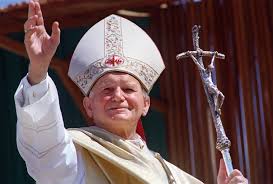
Generally the Pope wears white all over whereas other bishops wear purple. He also carries a papal staff called a Papal Ferula, which is a tall staff, topped by a cross. All other bishops carry a crozier (a shepherd's staff with a crook at the top) instead.


The first Pope
The first pope was St Peter. He was the only pope made pope by Jesus Christ. The Bible tells us that Jesus made him the leader of the Apostles and changed his name from Simon to Peter, saying that on this rock he will build his church. He was referring to Peter whose name means rock. He also gave Peter the keys to the kingdoms of heaven and hell. This is why the sign of the two keys is the sign of the Pope.


Peter went to Rome to preach the Gospel because as the head of the church, he went to the capital city of the Empire. He was martyred and when he was crucified, he told the soldiers to crucify him upside down because he was not worthy to be crucified upright like his Lord Jesus. So he was crucified upside down and to this day an upside down cross is known as the Cross of St Peter.
After he died, the soldiers cut off his head and he was buried headless. Christians built a church over the place where he was buried. Many many centuries later, in the 1950s, some workmen digging under the high altar of St Peter's Basilica in Rome found the skeleton of a man with no head. Could this be the bones of St Peter? It could be but we will never know for sure.
Pope Francis is the 265th successor to St Peter and we know the name of each and every one of them. This is important because we Catholics believe that the faith of Jesus Christ, as taught by Apostles has been handed down in an unbroken line. Therefore, the faith we hold is the same faith of Jesus Christ.
The Vatican City
The Pope is the head of an independent country called the Vatican City. It is the smallest country in the world, only 44 hectares in size. That is the size of about 60 football fields. Six Vatican Cities can fit into one square mile, not very big.
The Vatican City is in Rome. It includes St Peter's Basilica (a basilica is an important church with the four Papal Basilica being the most important), the huge church where all the big Catholic ceremonies take place and St Peter's Square outside as well get a few other buildings in Rome.
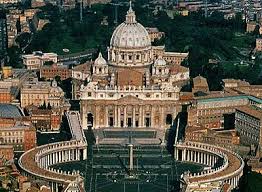

There is a line in white in St Peter's Square to demarcate the boundary between the Vatican City and Italy. It was painted during the Second World War by the Germans to tell a priest in the Vatican, who helped escaped POWs that if he crossed that line, he will be killed.
Vatican as a sovereign nation
Having an independent country of his own helps the Pope to make independent decisions for the Catholic Church without being influenced by anyone else. He will not be subject to laws or have any obligations to another country. As an independent country, the Vatican has diplomatic recognition of most of the countries in the world. It also has its own coins and stamps as well as its own Internet domain (.va).


The flag of the Vatican City is half in yellow, with the other half in white, with the Papal Coat of Arms. Yellow is therefore the Papal colour.

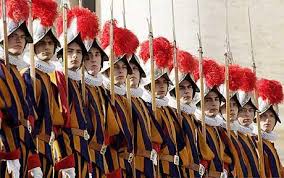
There is even an army, called the Swiss Guards. There are 110 guards drawn from Swiss Catholics who have done military service. They are not toy soldiers, but trained infantrymen.
The Pope's helpers
The Pope has many people to help him. There are over 100 Cardinals, most of whom work as bishops. Many others are heads of departments in the Vatican which help the Pope to administer the church & its finances worldwide, deal with other countries, religions & international bodies, and minister to the needs of Catholics in the universal church.
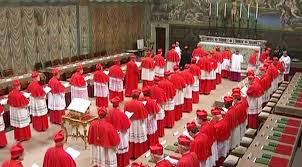
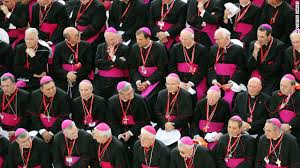
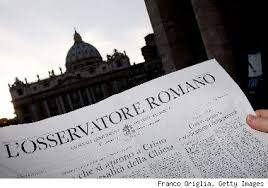
In addition, there are over 5000 bishops and archbishops throughout the world. Again, many of them work in Rome as part of the staff of the Vatican, assisted by priests. While many of these bishops & priests do work in the liturgy, administering Church law, faith education, etc, like other priests, many others do work we do not normally associate with priests. There are bishops & priests who work as diplomats (Vatican diplomats are often considered the best trained in the world), lecturers in universities, journalists (there is a Vatican newspaper, TV and radio station), astronomers (there is a Vatican Observatory), etc.


In future posts, I will explain the hierarchy of the Church as well on the election of a pope.
Who is the Pope
The head of the Catholic Church is Jesus Christ (note not the Pope!!). There are 1.2 billion Catholics throughout the world and Jesus needs help to take care of all 1.2 billion. So, Jesus has the Pope to help him with the job.
The current Pope is Pope Francis. He was formerly the Argentine Archbishop of Buenos Aires, Cardinal Jorge Bergoglio.
The Pope's name
As with the norm now, the Pope took on a new name when he became Pope. The tradition of the Pope picking a new name started with a Pope whose name was initially Mercury, the name of a Roman god. A Pope Mercury in those days would sound as odd as a Pope Buddha today and so he changed his name. Since then, many Popes have chosen names of someone they respected, like a saint or a previous pope. Often, the name indicates the direction of the papacy he envisages.
Pope Francis took on the name Francis in imitation of St Francis, a champion of the poor. This choice has set the theme to his papacy with his emphasis on social justice.
The Pope's titles
When we meet the Pope, we call him 'Holy Father'. The common way to address him formally is His Holiness. He has many many other titles and I will run through a few of them here.
Bishop of Rome, Archbishop of Roman Province, Primate of Italy
He is the Bishop of Rome. This means that he is a bishop like the other bishops with a job of taking care of all the Catholics in his diocese. In his case, the Pope is responsible for all the Catholics in Rome. He has of course bishops and priests to help him. The bishop assisting him who takes on most of his responsibility as the bishop of Rome is called the Vicar of Rome.
In addition to being the Bishop of Rome, the Pope is also the Archbishop of the Roman Province and the Primate of Italy. The Roman Province includes six other dioceses in the suburbs of Rome, which now exist only in name and is fully under the Roman diocese. A Primate is the leading bishop in a particular country, often the bishop of the first city on that country to have a bishop.
Vicar of Christ, Supreme Pontiff, Successor to the Prince of the Apostles
The Pope is also the Vicar of Jesus Christ, the Supreme Pontiff
and Successor to the Prince of the Apostles. The word Vicar means
representative and so, the Pope is the representative of Jesus Christ on
earth.
In the Catholic Church only a priest (which is what the word Pontiff means) can perform the sacrifice at mass and so, the highest sacrifice that the Catholic church can offer is the Papal High Mass by the Pope, the Supreme Pontiff.
The Prince of the Apostles was Peter, the first Pope and so, the Pope is the successor to St Peter.
In the Catholic Church only a priest (which is what the word Pontiff means) can perform the sacrifice at mass and so, the highest sacrifice that the Catholic church can offer is the Papal High Mass by the Pope, the Supreme Pontiff.
The Prince of the Apostles was Peter, the first Pope and so, the Pope is the successor to St Peter.
Sovereign of the Vatican City
The Pope is also the sovereign of the Vatican City. This means that he is head of the country called the Vatican City. That makes him the equivalent of president or a king or a prime minister in other
countries. More of that later.
Servant of the Servants of God
The last title is the most interesting. He is the Servant of
the Servants of God. A long time ago, Pope Gregory was upset at the Patriarch of Constantinople for taking on a grand title, calling himself the Ecumenical Patriarch which means Patriarch of the whole church. Pope
Gregory then took on the title of the Servant of the Servants of God is an
example of humility to the Patriarch.
How the Pope became the leader of the Church
How the Pope became the leader of the Church
In the early days of the Church, the 12 Apostles (the original 11 plus Matthias) went to different countries to evangelise the Gospel. They were very much acting on their own independently. Still, because the memory of Jesus' teachings was strong in them, what each apostle taught was the same as the others. The 12 Apostles were the first bishops.
Later, as the Apostles died off one by one, the bishops they consecrated continued the teachings of Jesus. But by then, there were many other people who had different ideas about what Jesus taught. The Church needed someone to be the arbiter of what was truly the teachings of Jesus.
Naturally, they turned to the most senior bishop around, the bishop of Rome and successor to St Peter, the Pope. The Roman Church also had a reputation of being very conservative and distrustful of new ideas (somewhat like today). This conservatism was instrumental in preserving the original faith from non-Christian ideas.
By the time of Pope St Clement, the third bishop of Rome, some Christians in Corinth appealed to him to settle some disputes in their church. We know this because we still have letters that Pope St Clement wrote to the Corinthians, just like St Paul did. These letters were very much treasured and almost made it into New Testament. (They were probably dropped because St Clement wasn't a direct disciple of Jesus.)
Later, when Christianity became the official religion of the Roman Empire, the Pope naturally became the head of the Church, being the bishop of the capital city and closest to the Emperor. More importantly in the view of the rest of the Church, Rome was the city of Saints Peter & Paul and the Pope is the successor of the Prince of the Apostles. When the Empire fell and there was no longer any single central government in Western Europe during the Dark Ages, the Pope provided sorely needed leadership.
In fact, he became so powerful that he was the one who crowned kings and emperors. With his own extensive country called the Papal States, one pope even led an army. Many wielded temporal power and was involved in European international politics until the Reformation.


Today, the Pope has long given up on the exercise of temporal power. His involvement in international politics is limited to furthering the values of the Gospels and occasionally mediating in wars & disputes. For the last five centuries or so, popes have focused on providing spiritual guidance and evangelising Gospel values.
What the Pope wears
There are two famous items reserved only to the Pope that no other
bishop will wear. The first is the Papal Tiara, a three-level crown that is no longer worn since Pope John Paul 1. The Tiara, called the Triregnum, still appears on the Papal Coat of Arms though. So, when you see something with a triple tiara logo, you know it is to do with the Pope.Later, as the Apostles died off one by one, the bishops they consecrated continued the teachings of Jesus. But by then, there were many other people who had different ideas about what Jesus taught. The Church needed someone to be the arbiter of what was truly the teachings of Jesus.
Naturally, they turned to the most senior bishop around, the bishop of Rome and successor to St Peter, the Pope. The Roman Church also had a reputation of being very conservative and distrustful of new ideas (somewhat like today). This conservatism was instrumental in preserving the original faith from non-Christian ideas.
By the time of Pope St Clement, the third bishop of Rome, some Christians in Corinth appealed to him to settle some disputes in their church. We know this because we still have letters that Pope St Clement wrote to the Corinthians, just like St Paul did. These letters were very much treasured and almost made it into New Testament. (They were probably dropped because St Clement wasn't a direct disciple of Jesus.)
Later, when Christianity became the official religion of the Roman Empire, the Pope naturally became the head of the Church, being the bishop of the capital city and closest to the Emperor. More importantly in the view of the rest of the Church, Rome was the city of Saints Peter & Paul and the Pope is the successor of the Prince of the Apostles. When the Empire fell and there was no longer any single central government in Western Europe during the Dark Ages, the Pope provided sorely needed leadership.
In fact, he became so powerful that he was the one who crowned kings and emperors. With his own extensive country called the Papal States, one pope even led an army. Many wielded temporal power and was involved in European international politics until the Reformation.
Today, the Pope has long given up on the exercise of temporal power. His involvement in international politics is limited to furthering the values of the Gospels and occasionally mediating in wars & disputes. For the last five centuries or so, popes have focused on providing spiritual guidance and evangelising Gospel values.
What the Pope wears
The other famous item is a ring. All bishops wear a ring but only the Pope has the Ring of the Fisherman. The fisherman refers to St Peter, the first pope. The ring have a depiction of a fisherman casting his net out to sea. All previous popes had rings made of gold but Pope Francis has a ring made of silver. In fact, Pope Francis' ring is not a new ring and was previously owned by another bishop in Rome.
In the past, rings were used to seal documents, just like signatures today. As such, when a Pope dies, one of the first thing they do is to break the ring and the new Pope gets a new one. Pope Francis therefore broke with tradition. When we meet the Pope, we show our respect by kissing his ring.
Generally the Pope wears white all over whereas other bishops wear purple. He also carries a papal staff called a Papal Ferula, which is a tall staff, topped by a cross. All other bishops carry a crozier (a shepherd's staff with a crook at the top) instead.
The first Pope
The first pope was St Peter. He was the only pope made pope by Jesus Christ. The Bible tells us that Jesus made him the leader of the Apostles and changed his name from Simon to Peter, saying that on this rock he will build his church. He was referring to Peter whose name means rock. He also gave Peter the keys to the kingdoms of heaven and hell. This is why the sign of the two keys is the sign of the Pope.
Peter went to Rome to preach the Gospel because as the head of the church, he went to the capital city of the Empire. He was martyred and when he was crucified, he told the soldiers to crucify him upside down because he was not worthy to be crucified upright like his Lord Jesus. So he was crucified upside down and to this day an upside down cross is known as the Cross of St Peter.
After he died, the soldiers cut off his head and he was buried headless. Christians built a church over the place where he was buried. Many many centuries later, in the 1950s, some workmen digging under the high altar of St Peter's Basilica in Rome found the skeleton of a man with no head. Could this be the bones of St Peter? It could be but we will never know for sure.
Pope Francis is the 265th successor to St Peter and we know the name of each and every one of them. This is important because we Catholics believe that the faith of Jesus Christ, as taught by Apostles has been handed down in an unbroken line. Therefore, the faith we hold is the same faith of Jesus Christ.
The Vatican City
The Pope is the head of an independent country called the Vatican City. It is the smallest country in the world, only 44 hectares in size. That is the size of about 60 football fields. Six Vatican Cities can fit into one square mile, not very big.
The Vatican City is in Rome. It includes St Peter's Basilica (a basilica is an important church with the four Papal Basilica being the most important), the huge church where all the big Catholic ceremonies take place and St Peter's Square outside as well get a few other buildings in Rome.
There is a line in white in St Peter's Square to demarcate the boundary between the Vatican City and Italy. It was painted during the Second World War by the Germans to tell a priest in the Vatican, who helped escaped POWs that if he crossed that line, he will be killed.
Vatican as a sovereign nation
Having an independent country of his own helps the Pope to make independent decisions for the Catholic Church without being influenced by anyone else. He will not be subject to laws or have any obligations to another country. As an independent country, the Vatican has diplomatic recognition of most of the countries in the world. It also has its own coins and stamps as well as its own Internet domain (.va).
The flag of the Vatican City is half in yellow, with the other half in white, with the Papal Coat of Arms. Yellow is therefore the Papal colour.
There is even an army, called the Swiss Guards. There are 110 guards drawn from Swiss Catholics who have done military service. They are not toy soldiers, but trained infantrymen.
The Pope's helpers
The Pope has many people to help him. There are over 100 Cardinals, most of whom work as bishops. Many others are heads of departments in the Vatican which help the Pope to administer the church & its finances worldwide, deal with other countries, religions & international bodies, and minister to the needs of Catholics in the universal church.
In addition, there are over 5000 bishops and archbishops throughout the world. Again, many of them work in Rome as part of the staff of the Vatican, assisted by priests. While many of these bishops & priests do work in the liturgy, administering Church law, faith education, etc, like other priests, many others do work we do not normally associate with priests. There are bishops & priests who work as diplomats (Vatican diplomats are often considered the best trained in the world), lecturers in universities, journalists (there is a Vatican newspaper, TV and radio station), astronomers (there is a Vatican Observatory), etc.
In future posts, I will explain the hierarchy of the Church as well on the election of a pope.
Subscribe to:
Posts (Atom)